The 4-Point System expresses the quality of a fabric roll as a number: every defect receives 1 to 4 penalty points according to its size. Based on the ASTM D5430 standard, it is the most widely used fabric inspection method in the world for both woven and knitted fabric. The result is reported as points per 100 square metres (or 100 square yards), and this number decides whether a roll is first quality or second quality.
Also written as “4 point” or “four-point system” — all refer to the same ASTM-based method.
What Does the 4-Point System Do?
Fabric is the largest cost item in garment production, and if defective fabric goes unnoticed into the fabric lay, the loss multiplies: every piece cut from the faulty plies is either scrapped or comes back as a return. The 4-point system makes three things possible:
“The fabric was bad” is an opinion; “it scored 58 points per 100 m²” is a measurable result. Buyer, manufacturer and fabric supplier all talk about the same number.
The point limit written into the contract settles, beyond dispute, whether incoming fabric is accepted or returned.
Point records kept per roll reveal, over time, which supplier ships which level of quality.
How Are Defects Scored?
The core of the system is a single scale. Points are assigned by the size of the defect, not its type — a small oil stain and a short broken pick receive the same points:
Three rules complete the scale:
Which Defects Are Inspected For?
Scoring goes by size, but the operator needs to know what to look for. The most common defects:
| Group | Typical defects |
|---|---|
| Weaving defects | Broken end/pick, double pick, tight–slack picks, reed mark |
| Knitting defects | Ladder (run), hole, needle line, burst stitch |
| Dyeing–finishing defects | Shade variation, head-to-tail shading, dye and oil stains, crease mark |
| General | Knots, foreign fibre, width variation |
How Are Points per 100 m² Calculated?
The raw point total says nothing on its own — if a 300-metre roll and a 50-metre roll collect the same points, their quality is not the same. That is why the total is normalised to area:
Worked example
A 100-metre knitted roll, 220 cm wide, is being inspected:
This roll sits comfortably below the common limits shown next.
How Many Points Are Acceptable?
The binding limit is whatever is written into the contract with the buyer; established common practice in the industry is:
Corporate brands and sensitive product groups such as denim often tighten the per-roll limit to 20–28 points. What matters more than the number itself is that it is written into the contract — without an agreed limit, an inspection report carries no negotiating power.
How Is the Inspection Done in Practice?
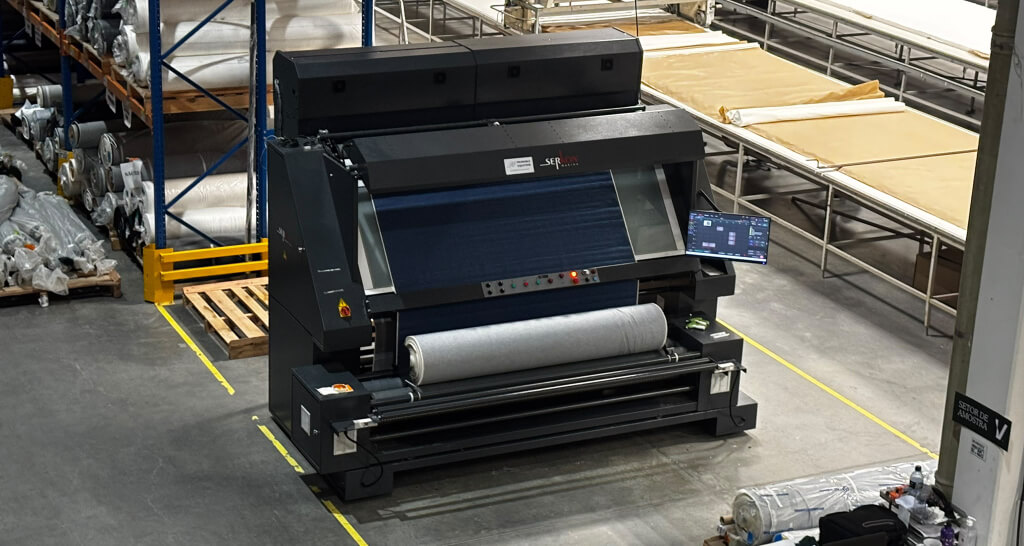
On paper the 4-point system is simple; its reliability depends on the conditions of the inspection. On a fabric inspection machine, the process runs like this:
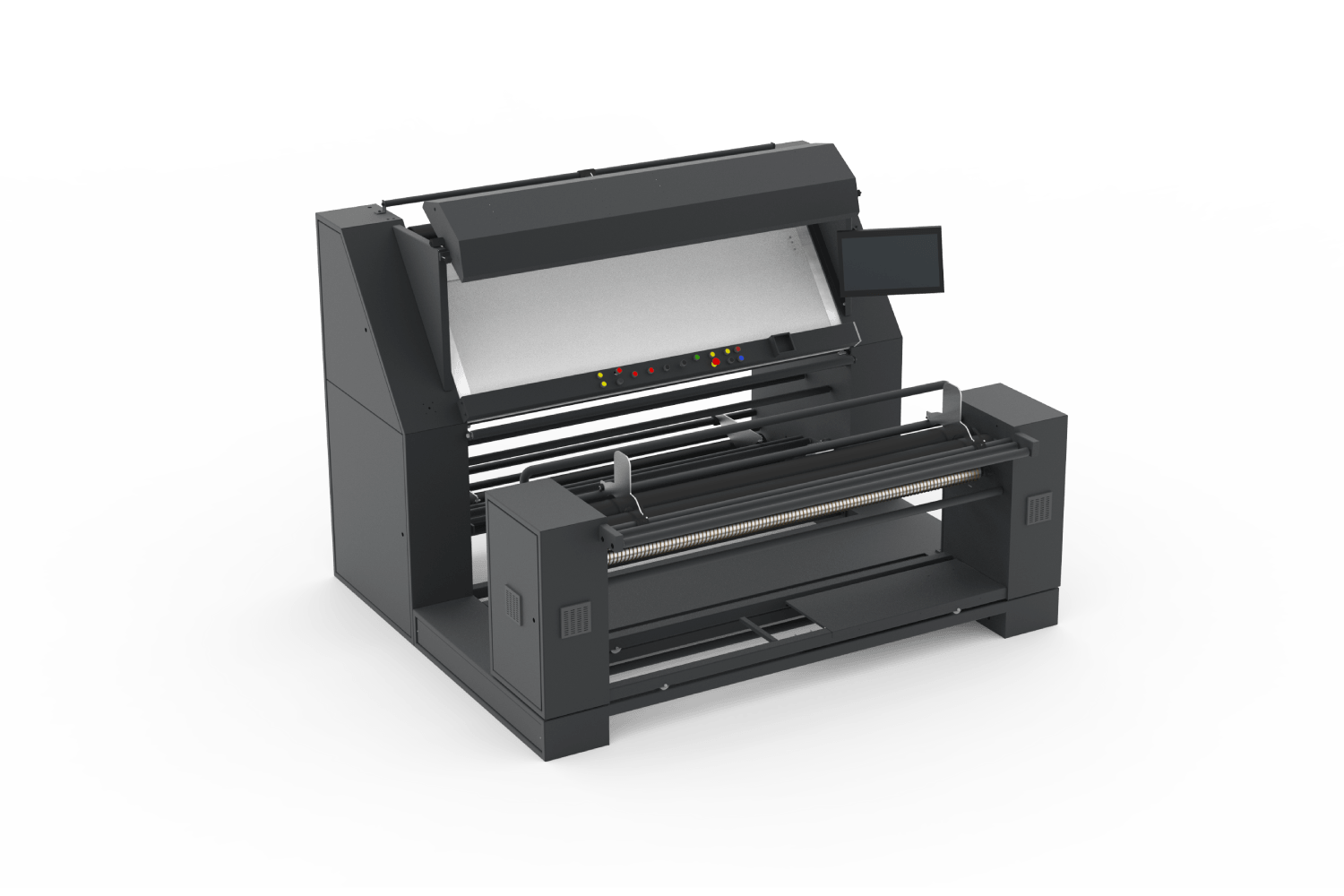
Most defects only become visible under the right light: surface defects from above, holes and thin places with backlighting from below. Serkon inspection machines come with top and bottom illuminated panels as standard; inspection standards recommend roughly 1,000 lux at the fabric surface.
The machines rewind at up to 60 m/min, but for visual assessment common practice is the 10–20 m/min band. An “inspection” run at full speed is just rewinding.
The operator flags each defect with a sticker at the selvedge, measures its size and enters its points on the inspection sheet (or in software).
Length is the denominator of the score: if it is measured wrong, the points come out wrong. The machine’s length measurement system records the true length; the value on the roll label is never trusted. The total is converted to points per 100 m² and the accept/reject decision is made.
4 Common Mistakes
- Trusting the length on the roll label. Every missing metre is money and a distorted score — length is always measured on the machine.
- Inspecting at rewinding speed. 60 m/min is a rewinding speed, not an inspection speed. Any speed the eye cannot scan is a missed defect.
- Not recording the points and tying them to the contract. A defect without a report counts for nothing in negotiations with the supplier.
- Sending uninspected fabric to cutting. Defects should be caught while the fabric is still on the roll, not in the lay — only approved fabric goes to spreading and cutting.
4-Point or 10-Point?
The older 10-Point System still comes up; the differences in short:
| 4-Point System | 10-Point System | |
|---|---|---|
| Scoring | 1–4 by defect size | Separate scales for warp and weft direction, 1–10 |
| Difficulty | Simple, quickly learned | Complex, open to interpretation |
| Adoption | The global de facto standard (ASTM D5430) | Legacy; in some US-origin specifications |
Unless the buyer specifically requires otherwise, the preferred method today is the 4-point system.
Conclusion
The 4-point system takes fabric quality out of the realm of argument and turns it into a measurable number: points by size, normalisation by area, decisions by contract. Its reliability, in turn, depends on the inspection conditions — without the right light, the right speed, true length measurement and controlled tension, the score cannot be trusted either.
Serkon Makina’s fabric inspection machines, developed separately for woven and knitted fabric, provide the full infrastructure of 4-point inspection in a single machine: top and bottom illuminated panels, a length measurement system and automatic tension-controlled winding.
Make Fabric Inspection Measurable
Let us help you choose the right inspection machine for your woven and knitted lines — and build your 4-point infrastructure with illuminated panels, length measurement and tension-controlled winding.
✉ Request a Quote Explore Inspection Machines