A lay is the stack of fabric layers spread on top of one another before cutting. In garment manufacturing, parts are not cut one at a time — dozens or even hundreds of plies are cut together, and that stack of plies is the lay. Preparing it properly is the precondition for cutting quality: if the plies are misaligned or spread under tension, even the most precise cutter cannot produce parts to size.
Fabric is the largest single cost in garment manufacturing. The lay directly determines two things:
Fabric yield (waste)
How tightly the pattern pieces are nested on the lay determines how many parts you get per metre.
Dimensional consistency
Every ply in the lay must sit at the same tension and alignment. Otherwise the top part and the bottom part come out at different sizes.
That is why, in the cutting room, a lay is not “a pile of fabric” but a measurable production step.
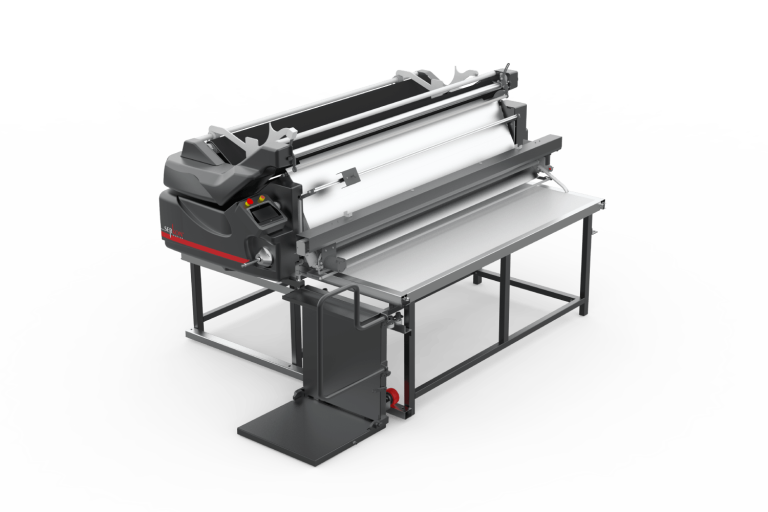
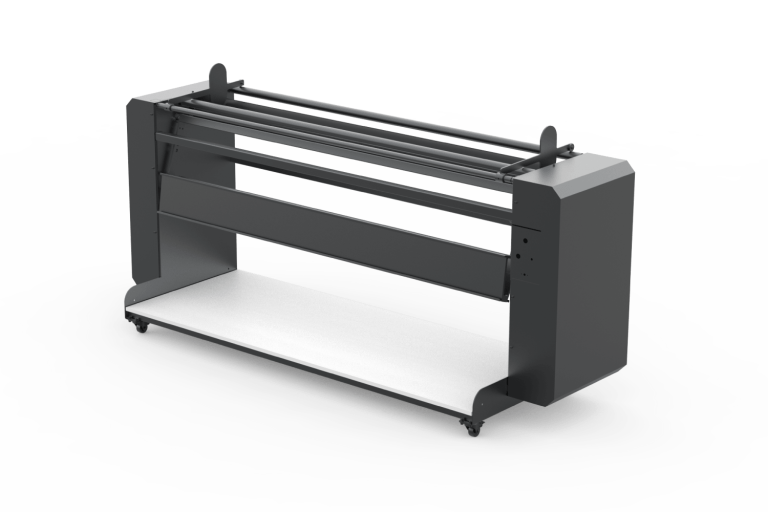
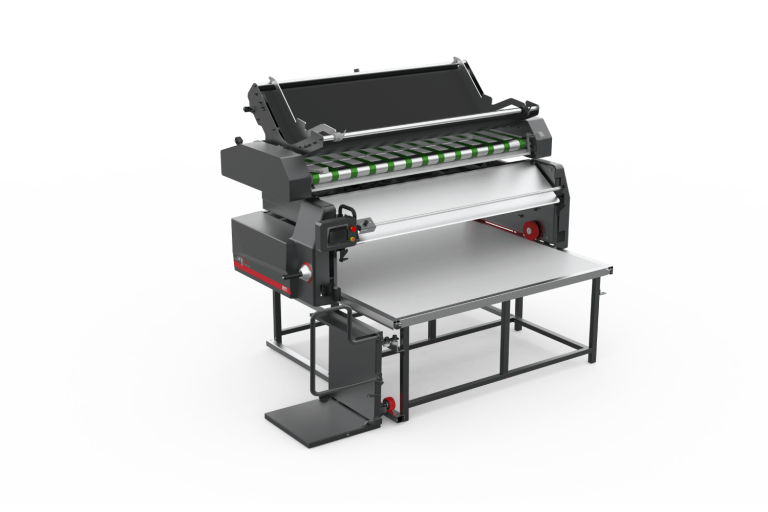
A lay is built ply by ply by the spreading machine: Serkon MN3 Mini Master
Lay Glossary: 8 Key Terms
LayThe complete stack of fabric plies spread before cutting
MarkerThe cutting plan in which pattern pieces are nested across the fabric width; prepared in CAD and transferred to the machine as a PLT file
Lay lengthThe length of the spread lay; set by order quantity and table length
Lay widthThe working width, tied to fabric width; 180–260 cm is the common range on spreading tables
Ply countThe number of fabric layers in the lay; determines order quantity and lay height
End-of-lay cutCutting the fabric across its width at the end of each spreading pass; performed by the spreader’s cutting unit
Splice pointThe point where a new roll is joined when one runs out; marked so that faulty parts are not missed
Compressed lay heightLay thickness after vacuum compression on the cutting table (different from its spread height)
Preparing a Lay: Step by Step
1
The marker is prepared (CAD)The process starts with software, not machinery. Pattern pieces are nested across the fabric width for minimum waste and a marker is produced. Serkon spreading machines work with lay files (PLT), so the plan is transferred straight to the machine.
2
The fabric is prepared and relaxedKnitted and elastane fabrics in particular are under tension while still on the roll. Relaxing the fabric with a shaking machine before spreading prevents it from drawing back (shrinking) afterwards. Fabric defects, in turn, should already have been caught while the fabric was still on the roll — the industry standard for that is 4-point fabric inspection.
3
The fabric is spread into a layWhat matters is not speed but tension control and edge alignment.MN3 and similar models use an electronic dancer bar and encoder system for even-tension spreading. Spreading speed reaches 100 m/min and fabric width 160–240 cm.
4
The lay is cut at the end of each plyWhen the spreader reaches the end of the table it cuts the fabric across its width and returns. This is done by the machine’s cutting unit; on the MN3 this unit adjusts automatically to the ply height. The term “end-of-lay cut” describes this operation.
5
A splice is made when a roll runs outThe point where the new roll is joined is called the splice point. Parts cut from the plies at a splice may be faulty. Serkon spreading machines display splice points, so those plies can be set aside.
6
The lay is transferred to cuttingConveyor transfer tables move the lay to the cutter on a motorised belt; air-floating tables slide a heavy lay friction-free on a cushion of air. The lay is then vacuum-compressed and cut by the CNC cutter.
Spreading Height and Cutting Height Are Not the Same Thing
This is the most commonly confused point in the industry, and it directly affects machine choice. The same lay drops to a completely different thickness under vacuum:
Spread layLoose state — up to 25 cm on the MN3
↓ vacuum
Compressed layCutting figure on cutters — 3–9 cm
🔎 The figure in cutter catalogues is always the compressed height. MC30 = 3 cm · DCC80 = 8 cm · DC90 = 9 cm. Confusing the two leads to buying a machine that is either too large or too small.
5 Factors That Determine Lay Quality
✓Tension control — if fabric is spread under tension it relaxes after cutting and parts come out small.
✓Edge alignment — if the plies do not sit on top of one another, parts at the pattern edge come out incomplete.
✓Ply count and height — a taller lay raises yield but pushes cutting precision; it must match the machine capacity.
✓Table and handling — however well the lay is spread, the work is wasted if alignment is lost on the way to cutting.
✓Splice point management — unmarked splice points reach the sewing room as faulty parts nobody noticed.
Why Is the Spreading Table a Separate Decision?
“Spreading table” is searched almost as often as “spreading machine” — because the table is half the system. Three types are common:
🧱
Modular spreading tableSteel construction, buildable in different lengths; works with both spreading and cutting systems.
💨
Air-floating tableMoves a heavy lay friction-free on a cushion of air, preventing deformation.
⚙️
Conveyor transfer tableTransfers the spread lay to the cutting area on a motorised conveyor without losing alignment.
Table width must cover your widest fabric; the common range is 180–260 cm. You can see all the options in the spreading tables category.
⚠ 3 Common Mistakes
Seeing the lay as just “a pile of fabric”. The lay is a measurable production step that determines waste rate and dimensional consistency.
Mistaking spreading height for cutting height. Catalogue figures describe different things; this confusion leads to the wrong machine choice.
Leaving the table and handling out of the plan. A well-spread lay is ruined by poor handling before it reaches the cutter.
25+years of experience
80+export countries
21,000 m²production facility
750+customers
Let’s Plan Your Whole Lay Chain, End to End
Tell us your fabric type, lay length and production volume; we will design the spreading machine, table and cutting system together and provide a free assessment and quotation.
A lay is the stack formed by fabric plies spread on top of one another before cutting. In garment manufacturing, parts are not cut one at a time but in multiple plies as a lay.
What is a marker?
A marker is the cutting plan in which pattern pieces are nested across the fabric width for minimum waste. It is prepared in CAD software and transferred to the spreading or cutting machine as a PLT file.
What does an end-of-lay cut mean?
The spreading machine cuts the fabric across its width at the end of each pass. This is done by the machine’s cutting unit; on advanced models the unit adjusts automatically to the ply height.
How many plies are there in a lay?
Ply count depends on order quantity, fabric thickness and machine capacity. The limiting factors are the spreading height of the spreader and the compressed cutting height of the cutter.
Why do spreading height and cutting height differ?
Spreading height refers to the loose lay; cutting height refers to the lay after vacuum compression. The MN3, for example, spreads up to 25 cm, while compressed cutting height on cutter models is 3–9 cm.
What does a spreading table do?
It is the surface on which the lay is spread and moved to cutting. Modular, air-floating and conveyor types exist; table width is usually between 180 and 260 cm.
S
Serkon Makina Technical Team
We have been manufacturing fabric spreading, cutting and quality control machines since 2000. A 21,000 m² production facility, an R&D centre and exports to more than 80 countries.