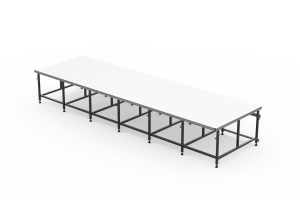
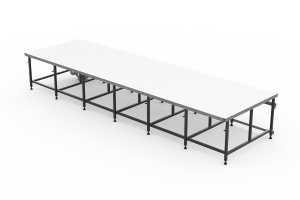
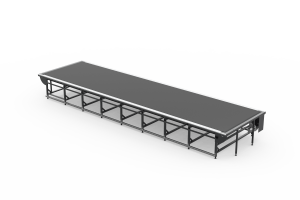
A spreading table is the work platform on which fabric is spread ply by ply and the lay rests until it is cut. There are three basic types: the modular (flat) table is the foundation of every spreading line; the air-floating table blows an air cushion through its surface so a heavy lay can be moved with little force; the conveyor table carries the finished lay to the cutting area on a motorised belt. The right choice depends on the cutting method (manual, a stand-alone CNC cutter or continuous cutting), lay weight and the number of lays per day.
In this article we compare the three types, explain which suits which operation and list the 7 criteria to check before you buy.
Why Does the Spreading Table Matter?
The spreading machine spreads the fabric and the cutter cuts it; the table carries everything in between. Plies rest, align, get cut or are transferred to the cutter on the table. A short table limits fabric lay length, a rough surface lets plies shift, and without a transfer solution every lay is dragged by hand. In our guide to choosing a spreading machine we said “machine, table and transfer are one system”; this article is the table leg of that system.
The Three Spreading Table Types
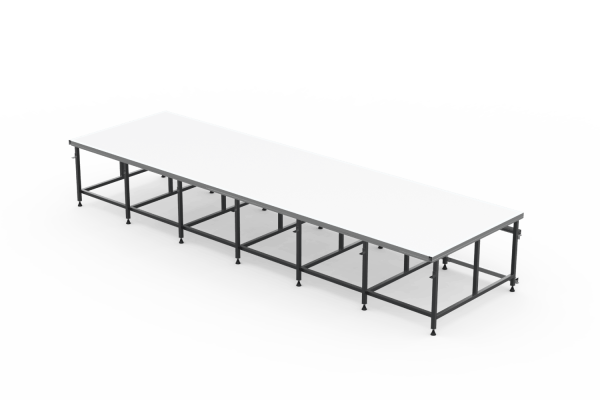 Modular (flat) spreading tableA smooth, seamless work surface on a steel frame. Built in modules, so it is installed at any length and can be extended later. The spreading machine’s rail is mounted on the table; it also serves manual spreading. If the lay is cut on the table or carried to cutting by hand, this is the base solution.View Product →
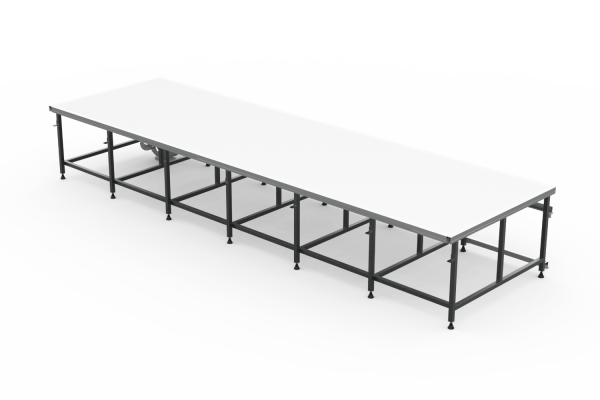 Air-floating (air cushion) spreading tableControlled air is blown through holes in the surface; the lay glides almost friction-free on the air cushion. One operator can push a heavy, high-ply lay onto the cutter bed alone; the fabric is not stretched and the plies stay intact. When the air is switched off, the lay settles in place. The standard solution for cutting rooms that transfer lays to a stand-alone CNC cutter.View Product →
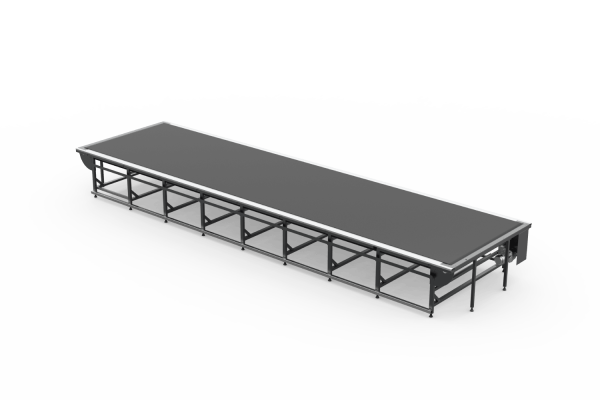 Conveyor spreading tableThe table surface is a motorised belt; when spreading is complete, the lay travels to the cutting area at a controlled speed. The operator never touches the lay; alignment and ply integrity are preserved. Because it can run in sync with continuous cutting machines, spreading and cutting become a single flow in high-capacity lines.View Product →
Comparison
| Modular table | Air-floating table | Conveyor table | |
|---|---|---|---|
| Lay transfer | Manual (dragging) | Pushed by hand on an air cushion | Motorised belt, automatic |
| Operator effort | High | Low | None |
| Heavy lays (denim, home textiles) | Difficult | Suitable | Suitable |
| Transfer to cutter | Manual | Pushed | Synchronised |
| Alignment / ply integrity | Depends on the operator | Preserved | Preserved |
| Suitable cutting method | Manual cutting, lay cut on the table | Stand-alone CNC cutter | Continuous cutting / high capacity |
| Investment | Low | Medium | High |
Which Table for Which Cutting Room?
The two functions can be combined in one line: the spreading section of the table can be air-floating and the final section feeding the cutter a conveyor. Lay weight and the number of lays per day make the decision.
7 Criteria to Check Before You Buy
Chosen with a margin over your widest fabric; the common range is 180–260 cm. It must match the spreading machine’s width. Too narrow limits your fabric range; unnecessarily wide costs floor space and money.
Table length = longest lay length + the spreading machine’s parking allowance. The modular build can be extended later; plan the floor layout for the longer version from the start. Base it on the longest lay you will run in the next 3–5 years.
Flat, seamless and smooth: it prevents ply shifting and snagging, so plies spread tension-free stay where they are. On an air-floating table the air distribution across the perforated surface must be uniform.
Lay weight determines the transfer solution (air-floating power, conveyor motor). Heavy lays cannot be dragged by hand; for light knitted lays a modular table may be enough. Worked example below.
Table height must equal the cutter bed height, with the gap between them bridged; on a conveyor table the belt speed is synchronised with the cutter’s intake. Plan the table together with the CNC cutter.
The machine runs on rails mounted on the table; rail alignment must not break at module joints. Sourcing machine and table from the same manufacturer solves rail, height and service compatibility in one place.
A level floor and adjustable feet zero out module transitions. Working height should be close to the operator’s waist (typically 80–90 cm). Leave operator passage and roll loading space on both sides.
4 Common Mistakes
- Buying the table separately from the machine. Rail, height and width mismatch is the most frequent installation problem.
- Sizing the length for today’s lays. Extension is possible, but expensive if the floor and layout were not planned for it.
- Moving heavy lays by hand. Plies shift, edge alignment is lost, fabric waste and re-cutting increase; it is also a safety risk.
- Over-equipping for light fabrics. A conveyor investment does not pay back for a few light lays a day; a modular table is enough.
Conclusion
A spreading table is not “just a table”; it is the transfer decision between spreading and cutting. A modular table for manual cutting and light lays, an air-floating table for a stand-alone CNC cutter and heavy lays, and a conveyor table for continuous cutting and high capacity are the right starting points. Decide width, length and surface together with the spreading machine.
Let’s Plan the Table Together with the Machine
Share your fabric width, lay length and cutting method; we will propose the modular, air-floating or conveyor table together with the spreading machine and cutter as one line.
✉ Request a Quote Spreading Tables Spreading MachinesFrequently Asked Questions
What is a spreading table?
What does an air-floating spreading table do?
When is a conveyor spreading table needed?
How wide should a spreading table be?
How is spreading table length calculated?
Can modular and air-floating tables be combined?
Manufacturer of fabric spreading, cutting and inspection machines · Istanbul · 25+ years · exports to 80+ countries. October 2026.