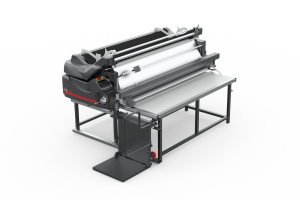
Fabric waste is the share of fabric entering the cutting room that never becomes a usable garment part. In apparel, fabric makes up more than half of product cost, so every 1-point drop in waste is worth more than most labour savings. Waste is not lost in one place: it is lost separately in the marker, in spreading, in fabric quality and in cutting.
This article first shows where and how waste is measured, then gives 7 concrete methods for each step, with a worked example.
How Is Fabric Waste Calculated?
In its simplest form, waste is the difference between the fabric that goes in and the parts that come out:
In practice, cutting rooms track two separate figures, because two different people are responsible for them:
Together, the two figures give total fabric utilisation. A common mistake is to look only at marker efficiency: a marker may show 88% while spreading and cutting losses push total waste to 18-20%.
Example: same marker, two different cutting rooms
| Cutting room A | Cutting room B | |
|---|---|---|
| Marker efficiency | 85% | 85% |
| End allowance (2 ends per ply) | 4 cm × 2 | 1.5 cm × 2 |
| Splice loss | Avg. 25 cm per ply | Avg. 8 cm per ply |
| Defect skipping / recuts | 2.5% | 0.8% |
| Total fabric waste | ≈ 21% | ≈ 17% |
Same marker, same fabric, and a 4-point gap between the two rooms. For a plant processing 500,000 m of fabric a year, that gap is 20,000 metres of fabric. Whatever the price per metre, this is the largest saving available in a cutting room.
Where Is Fabric Lost?
Before the methods, a map of the losses: seven loss points along the fabric’s path through the cutting room:
7 Practical Methods
Marker efficiency depends on the product: 85-90% for flat pieces such as shirts and T-shirts, 80-88% for trousers, 75-82% for multi-piece or direction-restricted garments. What matters is to set a target efficiency per product group and record the actual value of every marker. Waste that is not measured cannot be reduced. Plants using automatic nesting in CAD typically gain 1-3 points over manual nesting; combining sizes in a single marker (mixed marker) for small orders brings a similar gain on its own. We explained how a marker is prepared step by step in What Is a Fabric Lay?.
In manual spreading, the operator leaves 3-5 cm at each end in case the ply end is uneven. An automatic spreading machine cuts every ply at the same point with its cutting unit, so the allowance drops to 1-2 cm. The arithmetic is simple: on a 100-ply lay, reducing the end allowance from 4 cm to 1.5 cm saves 5 cm per ply and 5 metres per lay. For a cutting room spreading 20 lays a day, that is 100 m/day. Ply-end consistency is the one criterion in choosing a spreading machine that relates directly to waste.
When a roll runs out, the zone where the new roll is laid over the old one is decided “by eye” in most cutting rooms and reaches 30-50 cm. The right way is to define splice marks in the marker: narrow zones where no pieces cross are chosen as splice points, rolls are changed only there, and the overlap stays at 5-10 cm. Automatic spreading machines read the splice points from the marker data and stop the operator at that point; the overlap is the same every time.
If defective fabric is spread unnoticed, the loss multiplies: parts from the defective plies are scrapped or recut. A roll graded on an inspection machine with the 4-point system and given a defect map delivers three things before it reaches the lay: rolls below first quality go back to the supplier, defect zones are skipped in spreading or the marker is shifted around them, and a supplier scorecard is kept. Recut rates run at 2-4% on uninspected fabric and fall below 1% on inspected fabric.
Fabric on the roll carries winding tension; elastane, knitted and tubular fabrics in particular shrink 1-3% once unrolled. Fabric spread under tension and cut immediately shrinks as cut parts and falls below pattern size; the result is recutting, or the habit of leaving generous allowances. The fix has two steps: relaxing the fabric before spreading (a shaking machine, or 12-24 hours open on a rack) and spreading tension-free. The tension control on automatic spreading machines, which synchronises fabric feed speed with carriage speed, exists for exactly this purpose.
More plies mean less cutting time, but there are two limits: in a high lay the top and bottom plies shift, the blade deflects in the lower plies and the operator adds a safety allowance. Compressed cutting machines hold the lay with vacuum and remove that shifting; choosing the right ply height for the fabric (“as high as the fabric allows”, not “as high as possible”) protects both speed and accuracy. A compressed height of 70-90 mm for denim and heavy wovens, and a lower lay with higher vacuum for fine knits, is the typical approach.
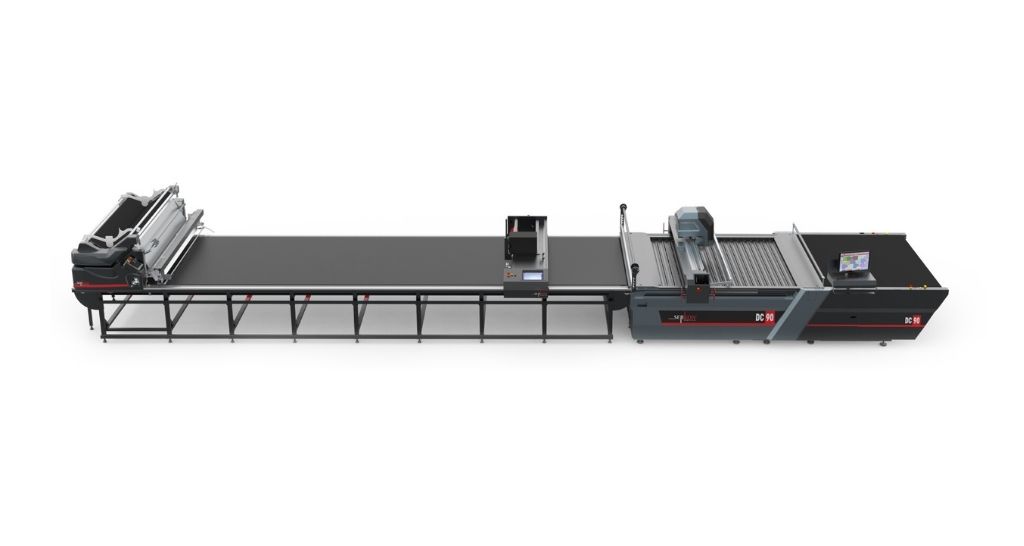
With manual (straight-knife) cutting, the operator leaves a 3-5 mm allowance around each piece against deflection, and the pieces are spaced in the marker accordingly. In CNC cutting the blade follows the line to ±0.5 mm, so pieces can be nested edge to edge; this alone raises marker efficiency by 2-4 points. Add the end of ply shifting and of recutting, and plants moving from manual to automatic cutting typically report a total waste reduction of 3-6 points. We explained how automatic cutting works in How Does a CNC Fabric Cutter Work?.
What Is a Waste Reduction Worth?
Multiply annual fabric consumption by the waste difference:
| Annual fabric | Waste reduction | Fabric saved | At $3 per metre |
|---|---|---|---|
| 250,000 m | 3 points | 7,500 m | $22,500 / year |
| 500,000 m | 3 points | 15,000 m | $45,000 / year |
| 500,000 m | 5 points | 25,000 m | $75,000 / year |
The figures are examples; insert your own fabric cost. As the table shows, waste is the main item that decides the payback of a spreading and cutting investment; the speed gain usually comes second.
4 Common Mistakes
- Tracking marker efficiency only — spreading and cutting losses stay invisible.
- Leaving end allowances and splices to the operator — the loss varies by person and cannot be measured.
- Spreading fabric without inspecting it — the defect is found at the most expensive point, in the cut part.
- The “leave a generous allowance, fix it later” habit — an allowance is systematic waste repeated on every ply.
Conclusion
Fabric waste is not the result of one machine but of the marker → inspection → spreading → cutting chain. The fastest gain is in end allowances and splices (no investment, just discipline); the largest gain comes from removing tension in spreading and the manual cutting allowance (automation). Measure first, then reduce step by step.
Let’s Measure the Waste, Then Cut It
We will identify the loss points in your spreading and cutting line together and propose the set-up, tension-free spreading and compressed cutting, that removes the allowances.
✉ Get a Quote Cutting Machines Spreading MachinesFrequently Asked Questions
What is fabric waste in the cutting room?
What is a normal fabric waste rate?
Are marker efficiency and fabric waste the same thing?
How does an automatic spreading machine reduce waste?
How much waste does CNC cutting save?
How is a waste reduction converted into money?
Manufacturer of fabric spreading, cutting and inspection machines · Istanbul · 25+ years · exports to 80+ countries. September 2026.