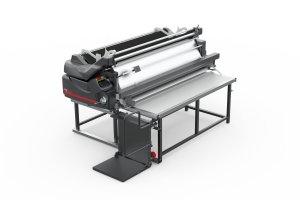
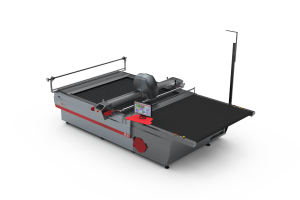
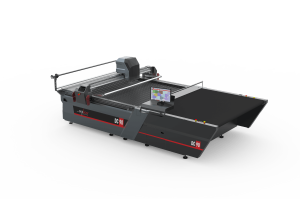
A used fabric cutting or spreading machine looks like half the price of a new one on the tag; in a cutting room, however, the real cost of a machine is the day it stands still. An older machine breaks down more often, spare parts take weeks, and when the cutter stops the sewing room sits idle: lost production, overtime and delivery risk are added on top of the repair bill, and the price gap closes within a few stoppages. The decision comes down to three questions: how many hours has the machine worked and who will service it, what does one day of downtime cost you, and which option has the lower 5-year total cost. Used makes sense below 4 lays a day, as a backup machine, or as a refurbished unit with warranty; for the machine that carries your main line, new equipment with warranty and local service pays off.
This guide covers the breakdown chain, the downtime cost calculation, a 5-year total cost of ownership comparison and a 12-point inspection checklist.
1. Why Used Looks Attractive, and Where It Misleads
Searches for second-hand spreading machines and used cutters keep growing for a reason: when the initial budget is tight, an automatic cutter or spreader at half price is tempting. The problem is not the price, it is what the price leaves out. Most used listings are sold “as is, no warranty”; dismantling, transport, reinstallation and calibration fall to the buyer. The machine has carried another cutting room’s workload for 8–10 years; its rails, guides, knife drive, vacuum motor and control boards have used up most of their life. The seller either does not know or does not say; you find out at the first stoppage.
- A price tag half that of new
- “In working order”, “lightly used”
- Immediate delivery
- A familiar brand name
- Dismantling, transport, installation, calibration: on the buyer
- No warranty; the first breakdown is yours
- Spare parts from abroad in 2–4 weeks, sometimes discontinued
- Old software: marker files incompatible, no reporting
- Spreading without tension control: 1–3% extra fabric waste
- Every day of downtime: idle sewing room, overtime, delivery risk
2. The Breakdown Chain: How a Stoppage Turns Into a Loss
The cutting room is the only gate in front of the sewing room. When the cutter or the spreader stops, it is not just that machine that stops; the whole line behind it goes unfed. The chain always runs in the same order:
With a used machine the first two links are long: breakdowns come more often and last longer. Without an authorised service, even the diagnosis takes days; if the part comes from abroad or the model is discontinued, the wait stretches to weeks. With a new machine the same chain is usually cut at the first link under warranty and with local service: the spare part is in stock and the technician is on the line the next day. The difference is not made on the repair invoice, it is made in the sewing room that waits.
3. How to Calculate Downtime Cost: An Example
Daily fixed cost: wages, rent, energy and overheads of the cutting room and of the sewing room it cannot feed. Catch-up: the overtime premium or the subcontract cutting difference. Delivery risk: late penalties, air freight, losing the next order.
Example: a line cutting 8 lays a day and feeding a 60-person sewing room. The drive board of the old cutter fails; there is no authorised service, the board comes from abroad and the line is down for 3 working days. Figures vary by factory; the table is there to show the items:
| Item | How it is calculated | In a 3-day stoppage |
|---|---|---|
| Repair and spare parts | Part price + service fee + travel + express freight | The visible invoice; often the smallest item |
| Production not cut | Lays per day × days down | 8 × 3 = 24 lays pushed back |
| Sewing room standing idle | People × days (wages paid, nothing produced) | 60 × 3 = 180 person-days of unproductive wages |
| Catch-up | Making up lost output at an overtime premium (50%) or by subcontracting | 24 lays in overtime; labour at 1.5× |
| Delivery risk | Late penalty, air freight difference, the next order | Can be the most expensive single item |
| Result | The repair invoice is a small part of the total loss. A three-day stoppage eats a significant share of the price gap between used and new in one go; after a few stoppages a year the gap closes and reverses. | |
How many stoppages a year? That depends on the machine’s age, the service network and its maintenance history. The pattern often seen in the field looks like this; exact figures differ for every machine:
| New, warranty + local service | 8–10-year-old used machine, service uncertain | |
|---|---|---|
| Unplanned breakdowns / year | 0–1 | 3–6 |
| Downtime per breakdown | Hours – 1 day (part in stock, technician next day) | 2 days – 3 weeks (diagnosis + part from abroad) |
| Downtime per year | 2–3 days including planned maintenance | 6–15 days |
| Who pays? | The manufacturer during the warranty period | You, every time |
4. 5-Year Total Cost of Ownership: New or Used?
The right comparison is not the purchase price but the total bill for the 5 years the machine will spend with you. Across nine items the difference breaks down as follows:
| Cost item | New machine | Used machine |
|---|---|---|
| Purchase | High | Low the only advantage |
| Transport, installation, calibration | Included installed by the manufacturer, handed over with a trial lay | On the buyer dismantling + transport + who installs it? |
| Warranty and service | Included warranty period + local technician | None every breakdown is paid, finding service is on you |
| Spare parts | In stock current model, parts held by the manufacturer | Risky 2–4 weeks, may be discontinued |
| Downtime loss (5 years) | Low planned maintenance | High the biggest hidden item (section 3) |
| Fabric waste | Low tension-free spreading, smart knife, end cutting | +1–3% no tension control on old spreaders; fabric is half the garment cost |
| Software and data | Current marker files, splice tracking, efficiency reports | Old file incompatibility, licence issues, no reports |
| Financing and incentives | Available investment incentives usually cover new equipment; leasing is easy | Limited outside most schemes, leasing is hard |
| Resale value after 5 years | Yes a 5-year-old machine with service history sells | Low a 13–15-year-old machine approaches scrap value |
Used is ahead in only one of the nine items. In most cutting rooms the sum of the other eight overtakes the purchase gap within 5 years; for a machine carrying the main line we often see that drop to 2–3 years. If you are planning the whole cutting room, see the cutting room setup guide for the space and flow side.
5. 12-Point Checklist for Buying Used
If you are still looking at used, spend your time on inspection, not on haggling. Three headings, twelve points:
6. When Used, When New?
| Your situation | Recommendation | Why |
|---|---|---|
| The only cutter / only spreader carrying the main line | New | A single point of failure stops the whole sewing room; warranty and local service are essential |
| 4+ lays a day, mostly elastane / knits | New | Tension control and a smart knife pay for themselves through the waste difference |
| A backup machine next to the existing line | Used can work | Production does not stop when it does; the checklist still applies |
| Small workshop, 1–3 lays a day, mostly wovens | Used or an entry-level new machine | At low capacity the price of downtime is small; compare with the price of an MC30-class small cutter and the MN1 |
| You found a refurbished machine with manufacturer warranty | Worth considering | Warranty, service and parts are solved; look only at software and capacity |
| A brand whose maker has closed or has no service in your country | Do not buy | The first board failure turns the machine into scrap |
Which new machine is a separate decision: for spreading see how to choose a fabric spreading machine, for cutting see straight knife or automatic CNC cutting.
5 Common Mistakes
- Comparing price tags only. Two figures cannot be put side by side before transport, installation, parts and downtime are added.
- Counting downtime as zero. When the cutter stops, the sewing room’s wages keep being paid; that is the most expensive item.
- Looking for service after buying. Authorised service and parts lead time are checked before the purchase.
- Buying without a trial. Rail, tension and knife condition cannot be judged without seeing your own fabric spread and cut.
- Ignoring incentives and leasing. The monthly payment on a new machine can be easier to carry than the cash price of a used one.
Conclusion
A used machine is not cheap; it looks cheap. In a cutting room the real cost is measured in days of downtime: breakdown, waiting for parts, an idle sewing room, overtime and a delivery date that slips. A new machine with warranty, local service and current software cuts that chain at the first link and comes out cheaper over 5 years in most factories. Used makes sense only at low capacity, as a backup machine, or as a refurbished unit with manufacturer warranty; and even then, do not skip the 12-point checklist.
Let’s Work Out the Real Cost of a New Machine Together
Tell us your daily lay count and fabric types; we will set out the 5-year total cost side by side with the used alternative, including warranty, service, spare parts and financing options.
✉ Request a Quote Cutting Machines Spreading MachinesFrequently Asked Questions
Does it make sense to buy a used fabric cutting machine?
What should I check when buying a used spreading machine?
How is the cost of a cutting machine breakdown calculated?
How long do spare parts take for a used machine?
Are there incentives for new cutting and spreading machines?
What is the difference between a refurbished and a used machine?
Manufacturer of fabric spreading, cutting and inspection machines · Istanbul · 25+ years · exports to 80+ countries. November 2026.